

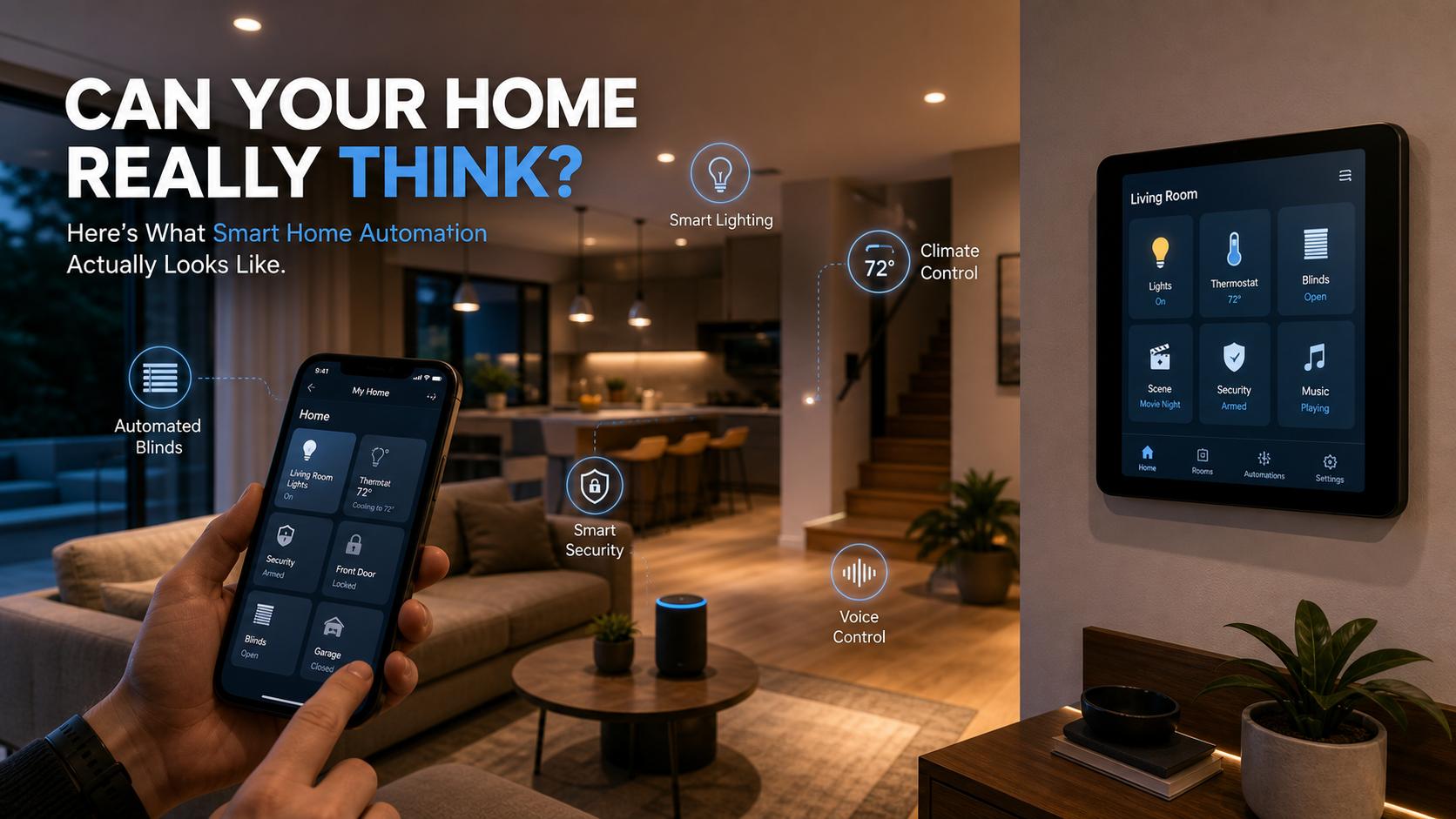
Can Your Home Really Think? Here’s What Smart Home Automation Actually Looks Like Leave a comment
Let’s be honest. “Smart home” used to sound like something out of a sci-fi movie. You’d imagine robots serving breakfast and lights that read your mind.
The reality is more practical. And honestly, better.
A truly smart home doesn’t need to be flashy. It just needs to make your life easier. It’s about walking into a room and having the lights turn on before your hand finds the switch. It’s about never wondering if you locked the front door because your phone already knows.
It’s about time. And time is something none of us have enough of.
Here’s what smart home automation actually looks like in real life.
It Starts Small
Most people think they need to automate everything at once. That’s not true. Some of the best automations are simple.
A motion sensor in the hallway that triggers a dim light at night. A door sensor that sends a notification when your teenager gets home from school. A smart plug that turns off your coffee maker automatically after two hours.
These don’t cost a lot. They don’t take hours to set up. They just work.
Once you’ve lived with one or two automations, you’ll start noticing other areas where you waste time. That’s when the fun begins.
The “Good Morning” Moment
Picture this. You wake up. The lights in your bedroom gradually brighten over ten minutes, simulating a natural sunrise. Your smart speaker starts playing a calm playlist. The thermostat adjusts from nighttime to daytime temperature.
You don’t touch a single button. You don’t scroll through an app. It just happens.
That’s not about having fancy gadgets. It’s about removing friction from your morning routine. Those few minutes of peace before the day starts make a difference.
What Most People Don’t Realize
Smart home automation isn’t about doing things faster. It’s about doing fewer things.
You don’t want to speed up the process of turning on lights. You want to eliminate the need to turn them on at all.
That shift in thinking changes everything. Instead of controlling devices, you’re creating an environment that responds to your presence, your habits, and your preferences.
The technology stays in the background. You barely notice it. And that’s exactly how it should feel.
Where to Start
If you’re new to automation, pick one small thing. A motion sensor for your hallway. A smart plug for your bedroom lamp. Something that saves you a tiny bit of effort every day.
Let that run for a week or two. Notice how it feels. Then think about what you’d like to automate next.
Your home doesn’t need to be the smartest home on the block. It just needs to work for you.
