

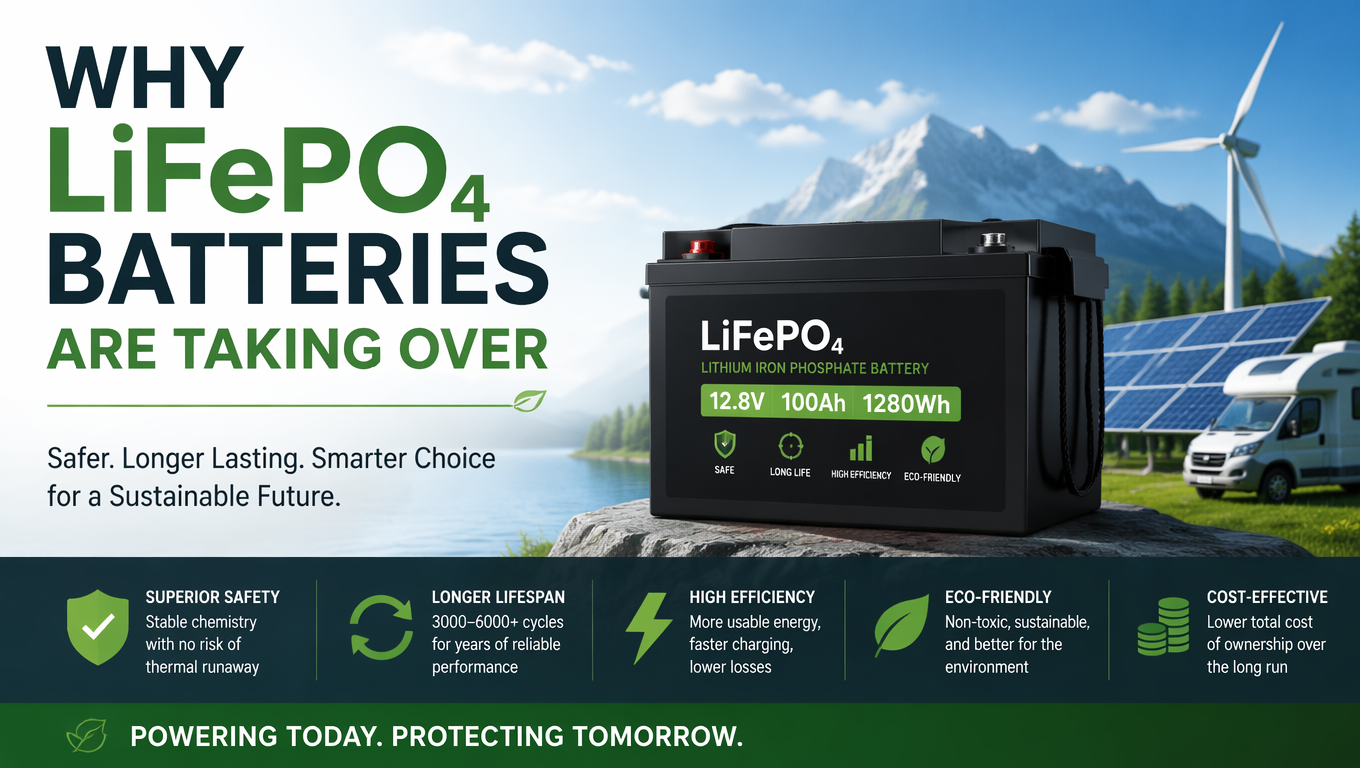
Why LiFePO4 Batteries Are Taking Over (And What It Means for Your Backup Power) Leave a comment
If you’ve been looking at power stations or solar generators recently, you’ve probably seen a lot of talk about LiFePO4 batteries. Three years ago, few people knew what that meant. Today, it’s almost impossible to buy a quality power station without one.
There’s a reason for that.
What’s Wrong With the Old Batteries
Older power stations used standard lithium-ion batteries. They worked fine. They were lightweight and reasonably durable.
But they had one big problem. They wore out quickly. Most lasted between 500 and 1,000 charge cycles. If you used your power station regularly, you’d need a replacement in about two to four years.
That’s not great for something meant to be a long-term investment.
There were other issues too. Standard lithium-ion batteries don’t handle heat well. They can catch fire if damaged or overcharged. They lose capacity over time, so after a year of use, they hold less charge than when you bought them.
The LiFePO4 Difference
LiFePO4 is a different chemistry altogether. It uses lithium iron phosphate. That small change makes a big difference.
These batteries last 3,000 to 5,000 charge cycles. That’s eight to ten years of regular use. Some models go even longer.
They’re also safer. They don’t overheat in the same way. They’re less flammable. They perform better in hot and cold temperatures.
You pay a bit more upfront. But you buy it once and forget about it for a decade.
Why Manufacturers Are Switching
The same reason you should. Customer complaints about short battery life were damaging brand reputation. Warranties were costing companies money.
Switching to LiFePO4 solved both problems. Customers get a product that lasts. Brands get fewer complaints and replacements.
It’s a win-win.
What This Means for You
If you’re shopping for backup power, look for LiFePO4. You’ll see it mentioned in the specifications.
Cheaper power stations still use standard lithium-ion. They cost less initially, but you’ll replace them sooner. Over time, the LiFePO4 option saves you money.
It’s like buying a quality pair of boots versus cheap ones that fall apart after a season. One costs more upfront. Both cost about the same over the long run, but the quality pair lasts longer and feels better the whole time.
The Bottom Line
LiFePO4 isn’t a marketing gimmick. It’s a genuine improvement. Most reputable power stations now use it. The ones that don’t are trying to hit a lower price point.
If you plan to use your power station regularly, it’s worth the investment. If it’s just for occasional emergencies, you might get away with a cheaper option.
But emergencies don’t announce themselves. When you need power, you need it to work. LiFePO4 gives you that confidence.
