

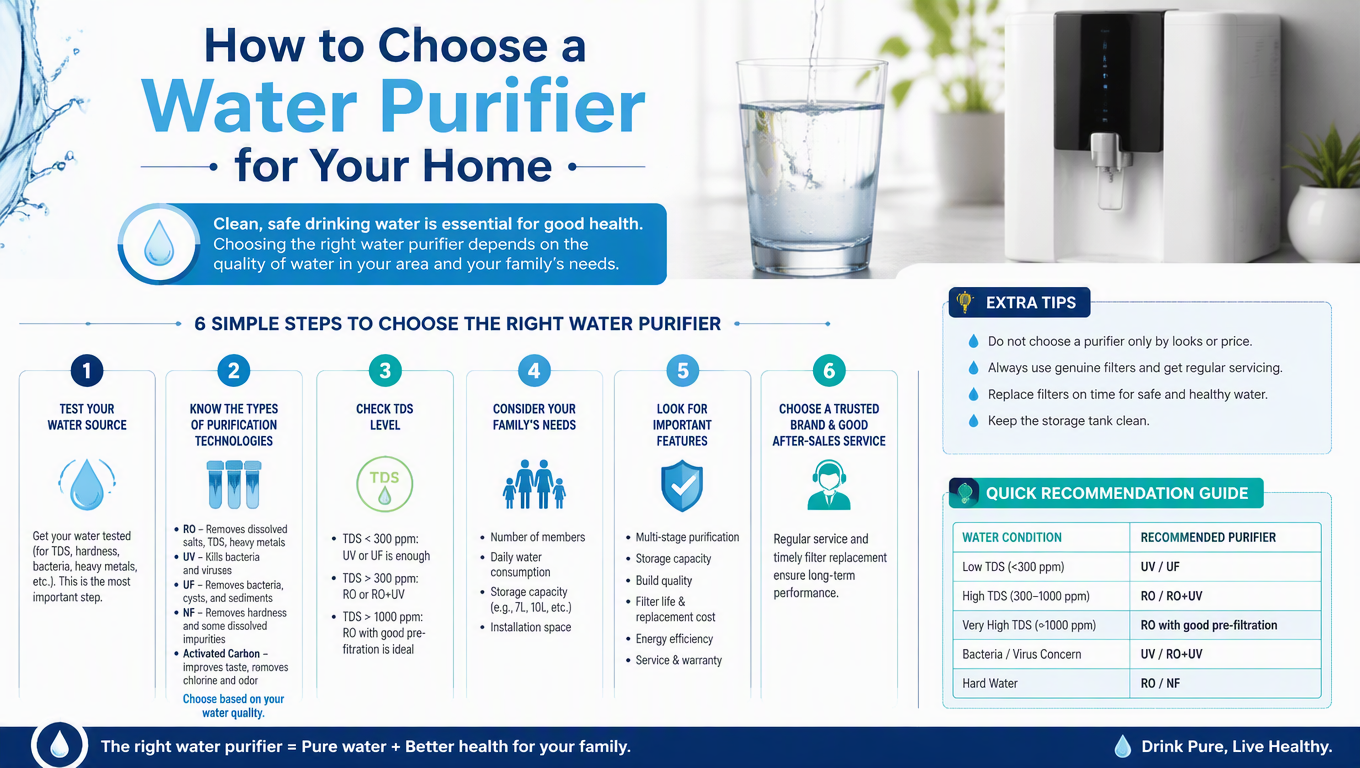
How to Choose a Water Purifier for Your Home Leave a comment
Water purifiers come in many shapes and sizes. Some sit on your counter. Some fit under your sink. Some connect directly to your tap. Some work without electricity.
How do you know which one is right for your home?
Here’s a simple breakdown to help you decide.
Why Purify Your Water?
The answer depends on where you live and what’s in your water. Some areas have hard water with high mineral content. Others have water that tastes of chlorine. Some homes have older pipes that leach sediment or metals.
A water purifier removes impurities, improves taste, and gives you clean drinking water without relying on bottled water.
Types of Water Purifiers
Reverse Osmosis (RO)
RO systems push water through a semi-permeable membrane that blocks dissolved solids, metals, and impurities. They produce some of the purest drinking water available.
Best for: Homeowners who want high-quality drinking water and are concerned about dissolved solids, heavy metals, or chemical residue.
Pros: Removes almost all impurities, improves taste significantly.
Cons: Requires installation under the sink, produces some wastewater during filtration.
Countertop RO
These sit on your counter and connect to your tap when needed. No permanent installation required.
Best for: Renters, people who move frequently, or anyone who doesn’t want to modify their kitchen.
Pros: Portable, easy to install.
Cons: Takes up counter space.
Gravity Filters
These use gravity to push water through a filter. No electricity, no plumbing. Just pour water in the top and wait for clean water to collect at the bottom.
Best for: Camping, travel, or simple home use.
Pros: Very simple, no installation.
Cons: Slower flow rate, requires manual refilling.
What’s Your Water Source?
Your water source matters. Municipal tap water usually needs different treatment than well water.
Municipal water is treated but can contain chlorine, chloramine, or trace contaminants. An RO system is a reliable choice for removing residual chemicals and dissolved solids.
Well water may contain sediment, iron, bacteria, or dissolved solids. A sediment filter plus an RO system offers reliable performance for most wells.
Bottled water is expensive and creates waste. If you’re replacing bottled water with a home system, it usually pays for itself within a year.
What to Consider Before Buying
- Installation: Do you own your home or rent? Some systems require permanent installation.
- Water pressure: RO systems need adequate water pressure to function effectively. Some include a booster pump if your pressure is low.
- Filter replacement: How often do you need to change filters? Are they easy to find? Costs add up over time.
- TDS monitoring: Some systems let you check Total Dissolved Solids in real time. This tells you if your filter is working and when it needs changing.
A Simple Recommendation
For most homes, a reverse osmosis system delivers the best balance of quality and convenience. If you rent or move frequently, choose a countertop RO unit that doesn’t require permanent installation. If you own your home, under-sink RO is a good investment.Water purifiers come in many shapes and sizes. Some sit on your counter. Some fit under your sink. Some connect directly to your tap. Some work without electricity.
How do you know which one is right for your home?
Here’s a simple breakdown to help you decide.
Why Purify Your Water?
The answer depends on where you live and what’s in your water. Some areas have hard water with high mineral content. Others have water that tastes of chlorine. Some homes have older pipes that leach sediment or metals.
A water purifier removes impurities, improves taste, and gives you clean drinking water without relying on bottled water.
Types of Water Purifiers
Reverse Osmosis (RO)
RO systems push water through a semi-permeable membrane that blocks dissolved solids, metals, and impurities. They produce some of the purest drinking water available.
Best for: Homeowners who want high-quality drinking water and are concerned about dissolved solids, heavy metals, or chemical residue.
Pros: Removes almost all impurities, improves taste significantly.
Cons: Requires installation under the sink, produces some waste water during filtration.
Countertop RO
These sit on your counter and connect to your tap when needed. No permanent installation required.
Best for: Renters, people who move frequently, or anyone who doesn’t want to modify their kitchen.
Pros: Portable, easy to install.
Cons: Takes up counter space.
Gravity Filters
These use gravity to push water through a filter. No electricity, no plumbing. Just pour water in the top and wait for clean water to collect at the bottom.
Best for: Camping, travel, or simple home use.
Pros: Very simple, no installation.
Cons: Slower flow rate, requires manual refilling.
What’s Your Water Source?
Your water source matters. Municipal tap water usually needs different treatment than well water.
Municipal water is treated but can contain chlorine, chloramine, or trace contaminants. An RO system is a reliable choice for removing residual chemicals and dissolved solids.
Well water may contain sediment, iron, bacteria, or dissolved solids. A sediment filter plus an RO system offers reliable performance for most wells.
Bottled water is expensive and creates waste. If you’re replacing bottled water with a home system, it usually pays for itself within a year.
What to Consider Before Buying
- Installation: Do you own your home or rent? Some systems require permanent installation.
- Water pressure: RO systems need adequate water pressure to function effectively. Some include a booster pump if your pressure is low.
- Filter replacement: How often do you need to change filters? Are they easy to find? Costs add up over time.
- TDS monitoring: Some systems let you check Total Dissolved Solids in real time. This tells you if your filter is working and when it needs changing.
A Simple Recommendation
For most homes, a reverse osmosis system delivers the best balance of quality and convenience. If you rent or move frequently, choose a countertop RO unit that doesn’t require permanent installation. If you own your home, under-sink RO is a good investment.
